
At the end of November, we had a plan for tank recovery: 1) empty the water, 2) secure it, 3) haul it up the cliff.
Step 1. Empty the water
We weren’t quite sure how much water was in the tank, but there was some.

There is a hole in the side at the bottom (where the tank drains) and at the top (where it’s filled). We had an extra water pump for our fifth-wheel that we bought as a replacement for the current pump, so Scott thought we could use that to pump out the water. We just needed to get it powered and get a hose into the tank. The pump ran off AC power and we have a portable battery that we purchased to run our property water tank that can supply either AC or DC. We hauled the battery and the pump down the cliff.
We had to figure out how to prop up the pump in order to get the hose into the best position then waited for it to empty.
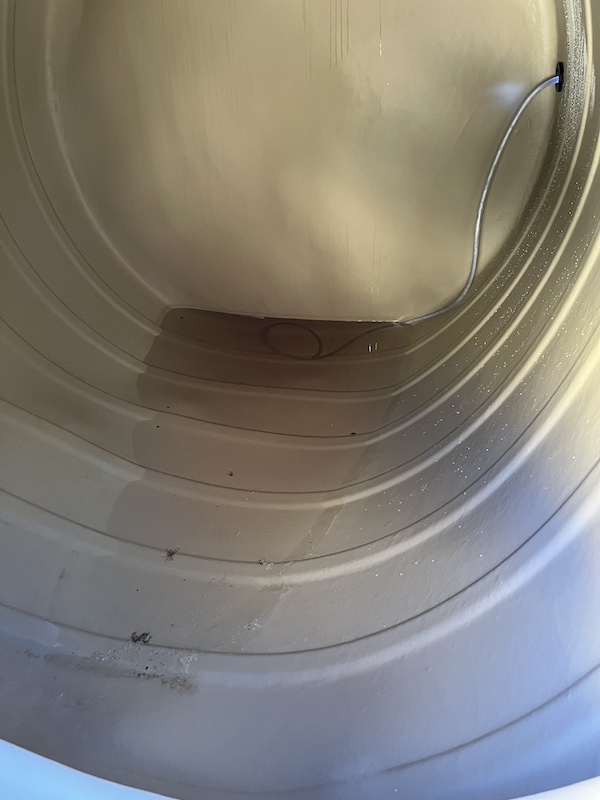
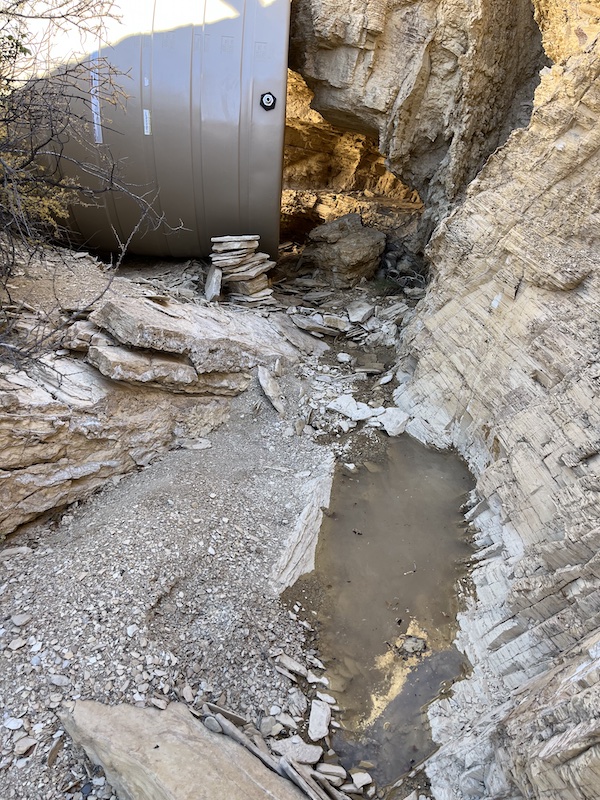
Took about 30 minutes to empty which at the rate of the pump means there were about 100 gallons of water in the bottom. That’s probably all we had in it before it blew down the cliff. We did find the spiggot valve on top of the cliff, so that pipe probably broke and then the water emptied all it could before getting blown off the cliff. It’s probably good there’s about 100 gal of water in the bottom that doesn’t get sucked out because we saw at least three spiders dead in the tank and I’m sure all kinds of bugs, rocks, whatever bits might get in there over time. That’s why we filter it!
Step 2. Secure it
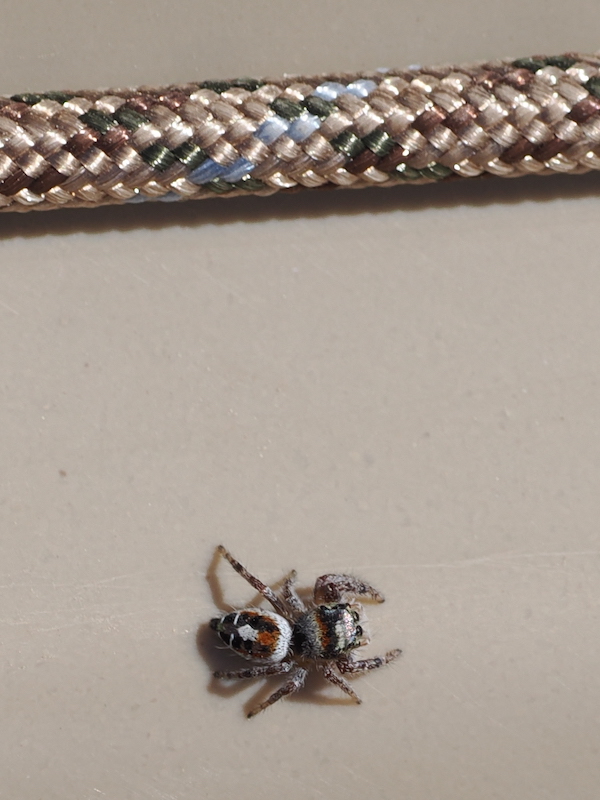
The paracord needed to be used to secure the tank and haul it up the cliff. We purchased 1000 ft of 550 lb paracord (desert colored) but then realized that might not be strong enough to haul the 500 lb tank up the cliff even with multiple strands. For reference, the diameter of the 550 lb paracord is about 4mm, which is about as wide as a jumping spider.
With a tank circumference of 25 ft, and around 200 ft up the cliff, we could have at most four strands up the cliff (800 ft) which would leave about 200 ft to wrap the tank, three to four wraps on one side, another four on the other. The initial testing (wrapped around the tank on top of the cliff, not the one at the bottom):
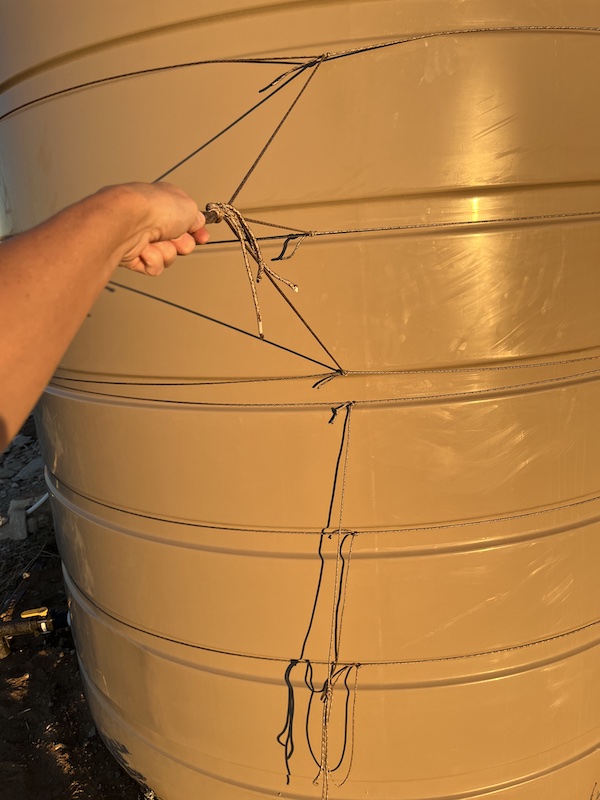
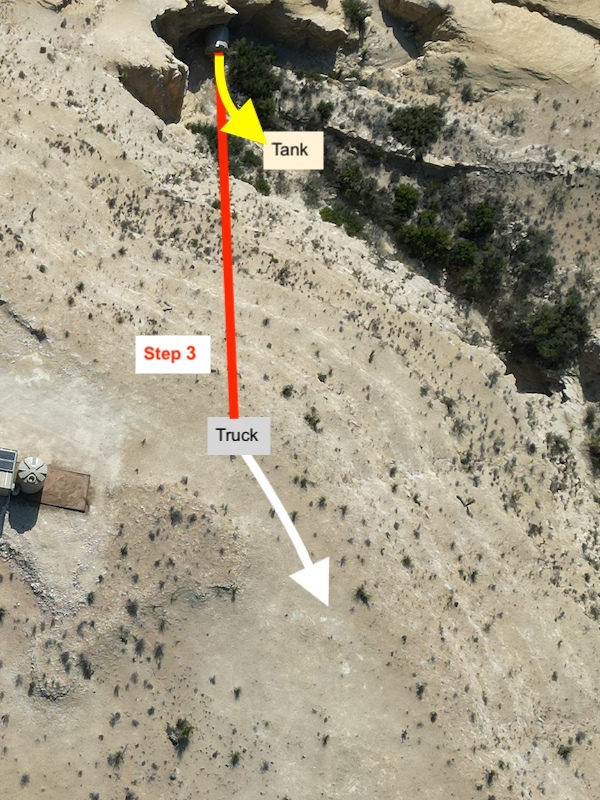
We decided four strands wouldn’t be enough (2200 lbs to haul a 500 lb tank up a cliff), so we purchased another 1000 ft of 1200 lb paracord (green). While waiting for that paracord to arrive, our friend Michael asked if we could get the stuck tank out of the wedged in space it was in by dragging it along the bottom of the gully with a rope attached to the truck, driving it along the ledge, something like this:
Step 3. Reposition the tank
We took two strands of the 550 lb paracord and attached it to the truck. At the tank, we tied three cords to the eyelets in the tank (it has four, but the fourth was cracked so we didn’t want to stress it). We smoothed out the bottom of the gully as best we could before attempting. Here’s a 2.5 minute clipped together video from two perspectives, the top of the cliff and the bottom of the gully (disclaimer, I’m using quicktime to splice, sorry the audio is a bit off at the end). I was trying to maneuver the tank down the gully, but as you can see there was a lot of stopping and starting. The tank would get stuck and we’d stop to reposition and get it unstuck then go again.
Scott and I switched places. By this point, one of the strands was frayed but I couldn’t figure out how to fix it while it had tension, so we just drove until both strands snapped.
This effort took the tank out of the hole it had been in and most of the way we wanted it:
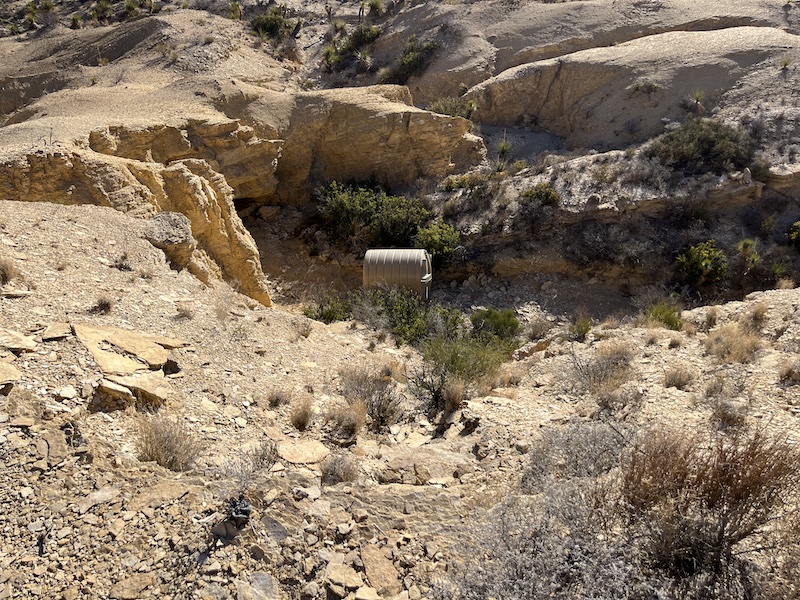
But we wanted it a bit further so we pulled/pushed by hand down in the gully until we got it in position.
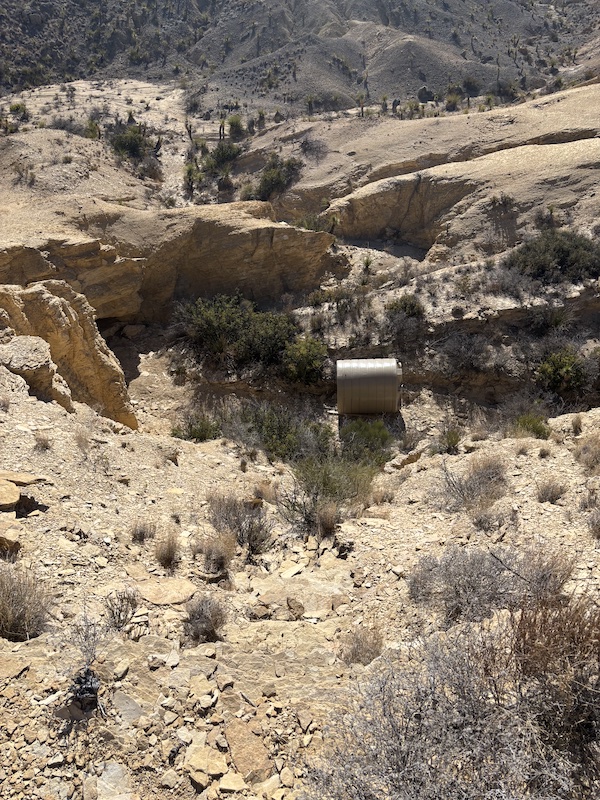
Now all that was left was to haul it up the cliff.
Step 4. Haul it up the cliff
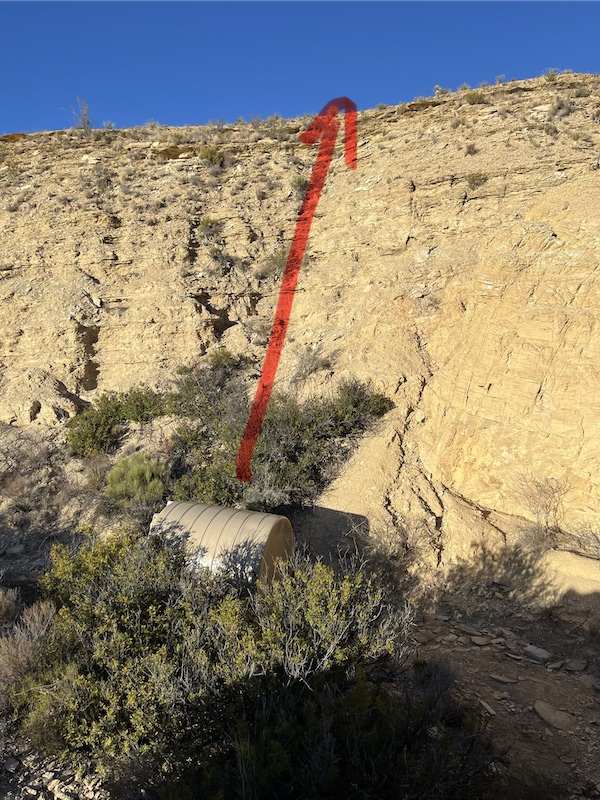
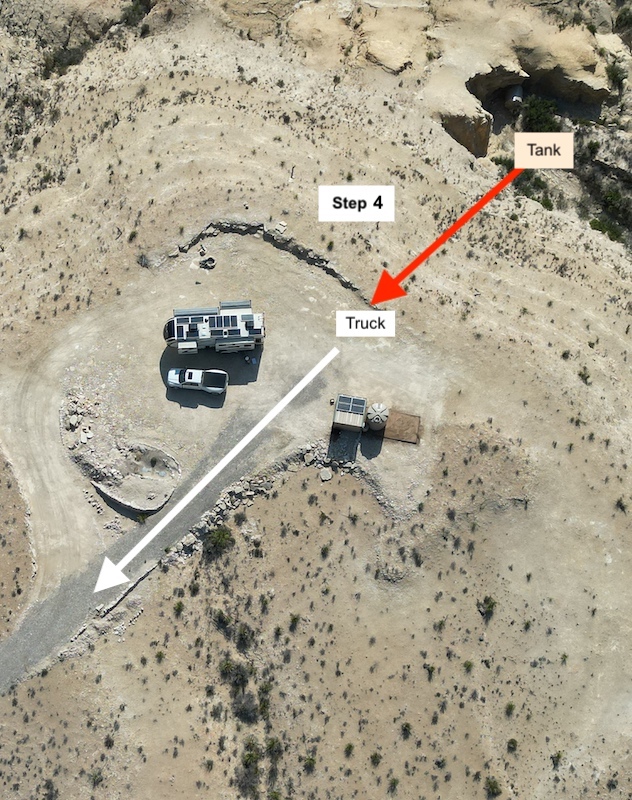
You can see from this view that the repositioning gave us a straight path down our driveway. You can also see there are two sections to the cliff, about 50 ft of steep (~80 degree) incline and then a gradual incline (~45 degrees), about 100 ft. Total length from the tank to the truck hitch was about 150 ft.
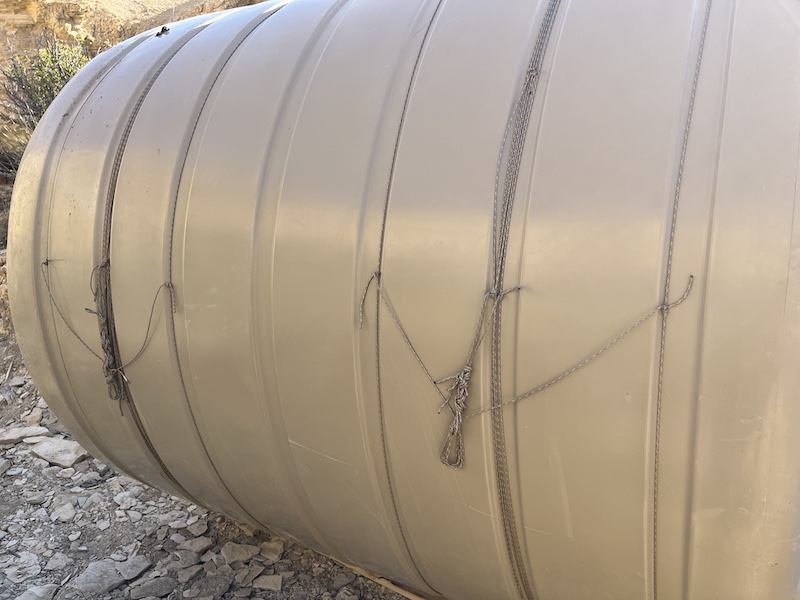
I wrapped the tank, using single (once around the tank) and double wraps (twice around the tank) for a total of six strands per side (four wraps in the middle rib and one on either side). All six strands were tied together in a bowline knot, leaving a loop for connecting.
Then we took six strands of the green 1200 lb paracord and connected it at one end to the truck (using two D carabiners and bowline knots) and the other end to the tank.
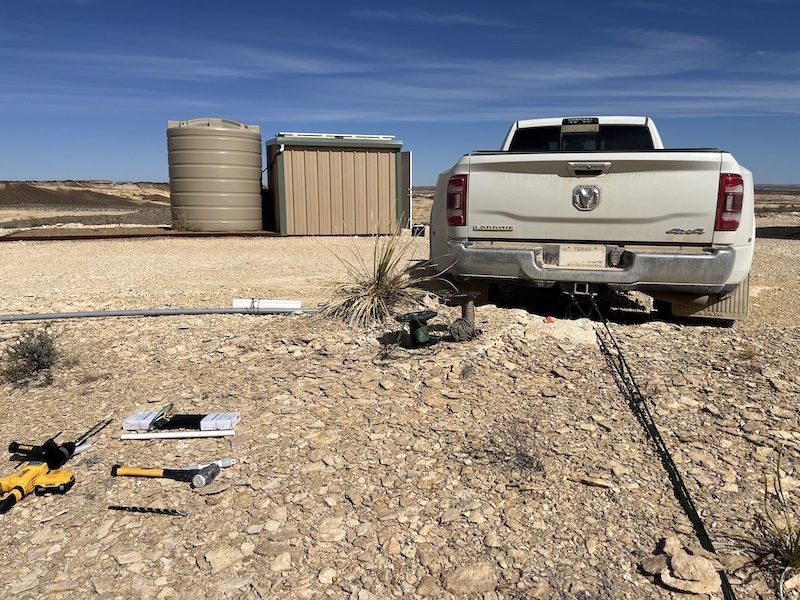
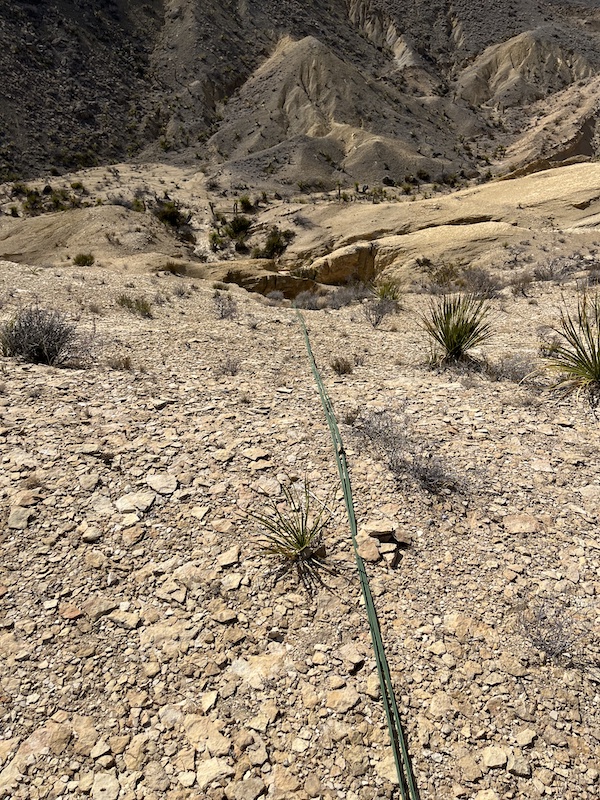
Down at the tank the single 6-strand section ended in a bowline knot and connected to the tank with carabiners and a shorter 4-strand length from the tank loops. We thought this would give us tank stability but leave us with one long 6-strand section up the cliff.
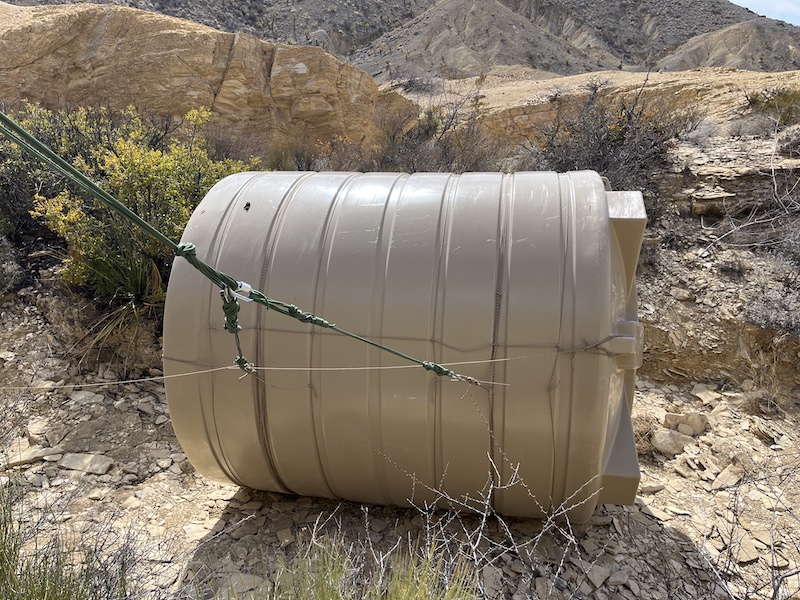
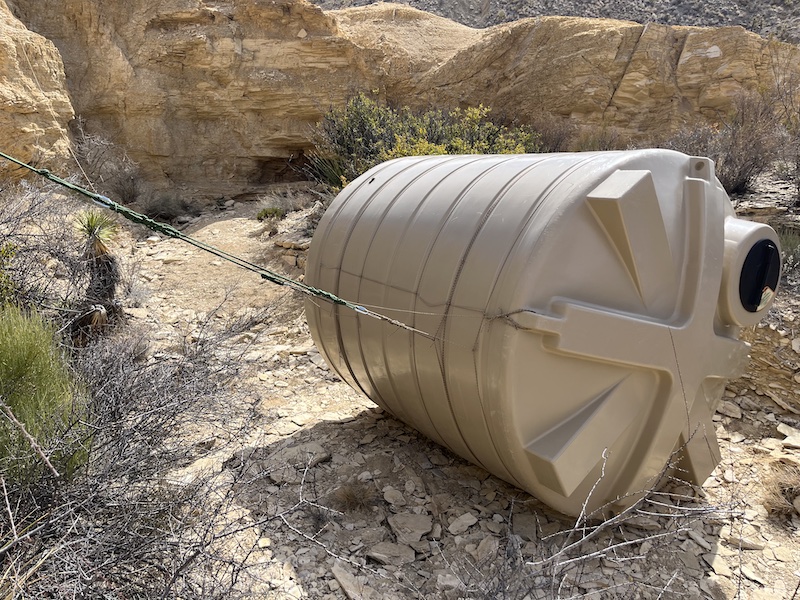
Then, as we learned from our last attempt to drag this down the gully, the rope rubbed along the rocks and would fray and break. So we identified the areas of most intense friction and put down some pipes to lift the rope off the rocks. We considered securing these somehow to the ground but in the end we decided not to.
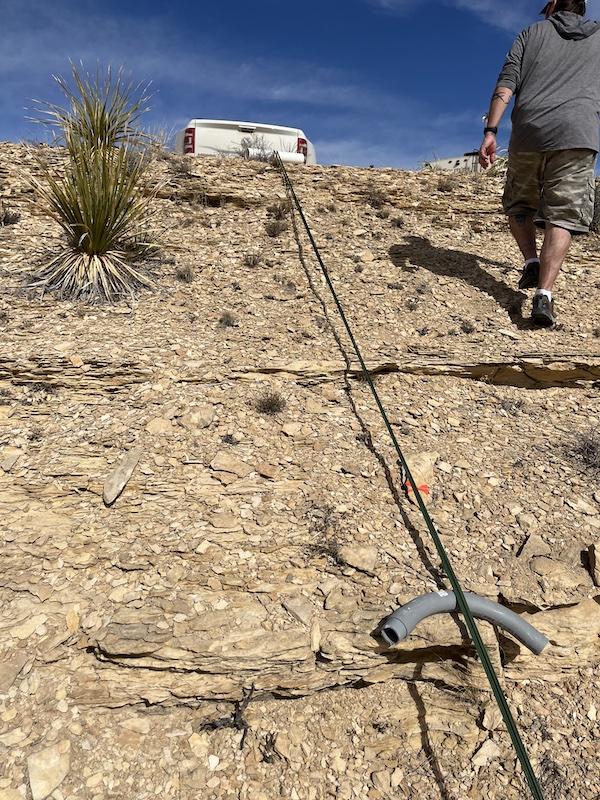
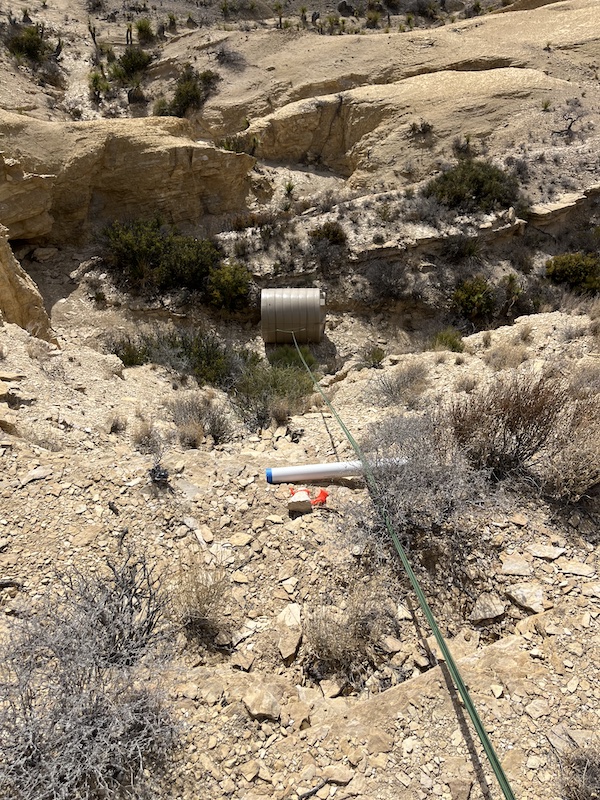
This pipe marks the transition from the steep to the gradual incline. From the gully it looks like this white pipe is at the top of the cliff (it’s not).
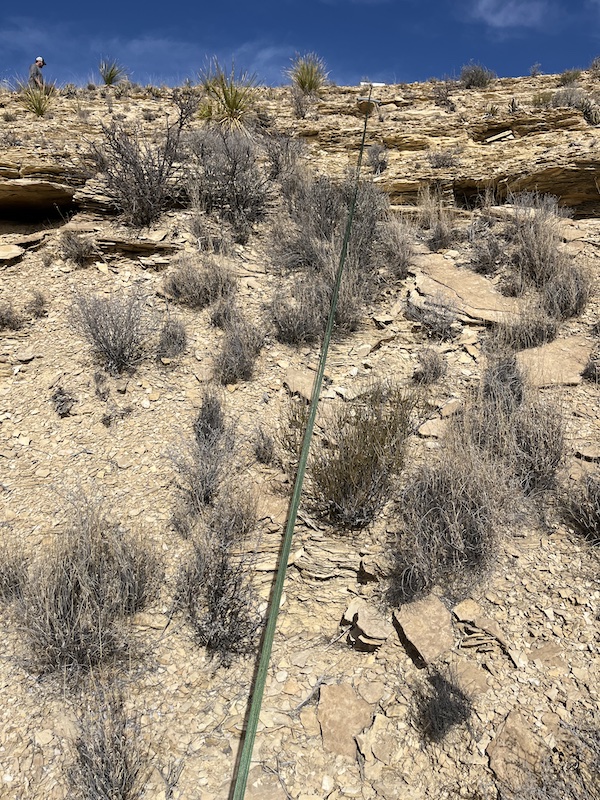
Once secured, it was go time. Scott set up the drone to capture an overhead view while I set up my phone on the ridge. Since you can’t really know what’s happening in the truck, we were on walkies and I was narrating the process. Here’s the video from the ridge
And the view from the drone:
It got stuck a few times, but really got stuck on the last lip of the cliff (where that transition pipe was). The top collection of tank wraps broke at that point and you can see the tank go vertical. I yelled “go go go” and started running up the cliff.
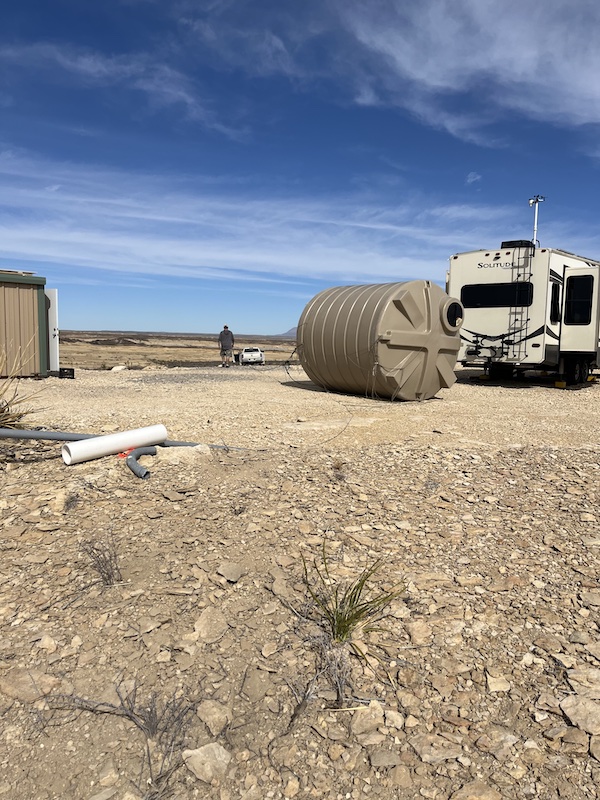
Luckily the bottom collection of wraps stayed secure around the tank enough for the momentum to get the tank up the rest of the way.
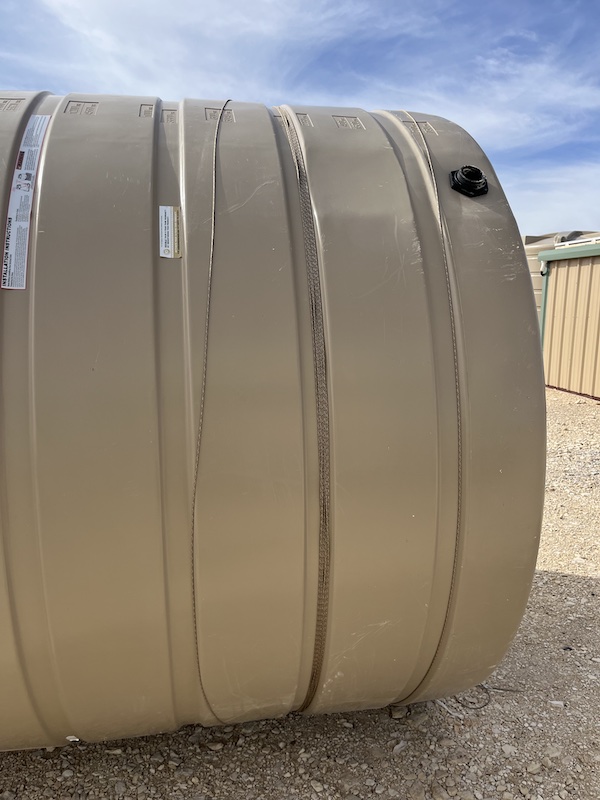
It wasn’t pretty but it was successful.
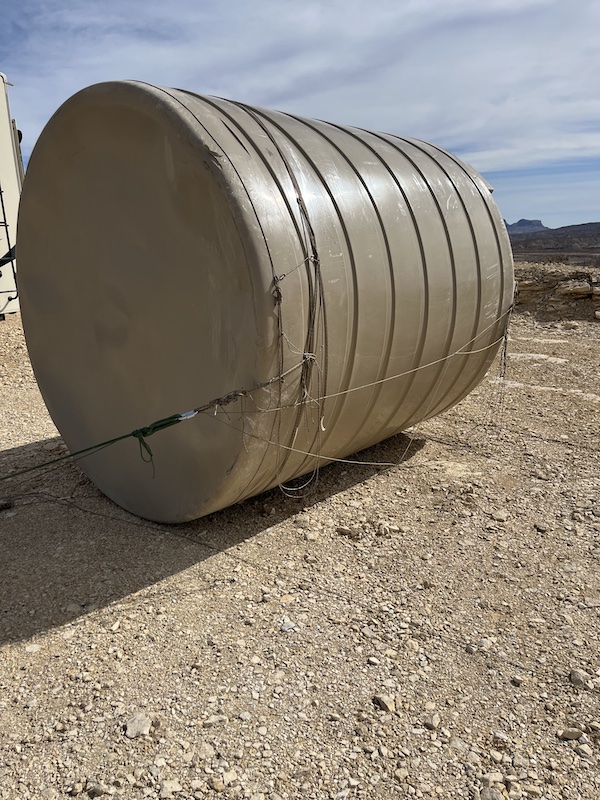
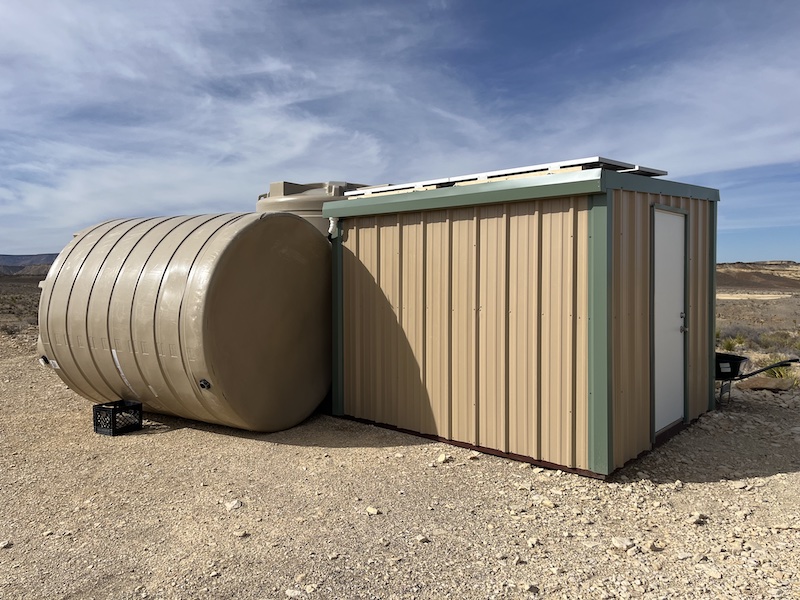
The tank is now back on the bluff. We aren’t sure it’ll hold water as there are some scrapes but no punctures. There’s only one crack that we can see, at the top eyelet. The plan is to either move it around to the back of the shed and secure it on its side (like it is now) or get our water guy to come out and help us reattach and fill it. Or at least stand it up and fill it to see if it’s watertight.
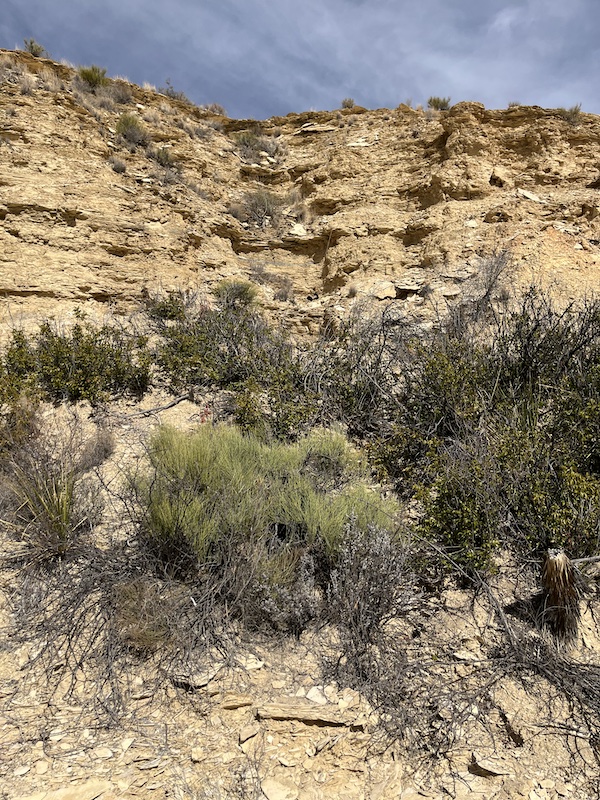
The cliff doesn’t seem to have sustained much damage from this; looks the same as it did before. Hopefully it didn’t damage the plants. There’s nothing obvious but if anything was uprooted or broken we won’t be able to see that until next year.
Now I just need to rig up a system to haul some of the sand from the bottom of this gully into the area around our septic where I want to grow plants and flowers. My dad did some research and found some seeds native to this area and sent them to us (thanks dad!). My next post will be about that rock wall project area.
Well engineered recovery! Glad it was safe as no one got injured with only one failure. We appreciate all the great photos and videos capturing the rescue. What a satisfying outcome at a reasonable low cost recovery – and without damaging the ecosystem too much! Congrats!
Thanks Dad! It felt like a lot of work for 45 seconds of actual retrieval, but we’re glad we were able to successfully get the tank back up the cliff.
Wow! Thank you for sharing the adventure!!!!
Thanks Sam! I sometimes how many people actually read these. It’s nice to see you are! 🙂
I can’t wait to hear if the tank holds water. Keep us posted. What retrieval!
Hopefully our water guy is able to come out before we leave this Friday. Otherwise we’ll just secure this tank on its side best we can so it lasts the next seven months until we return.